
Books Right Now Presents:
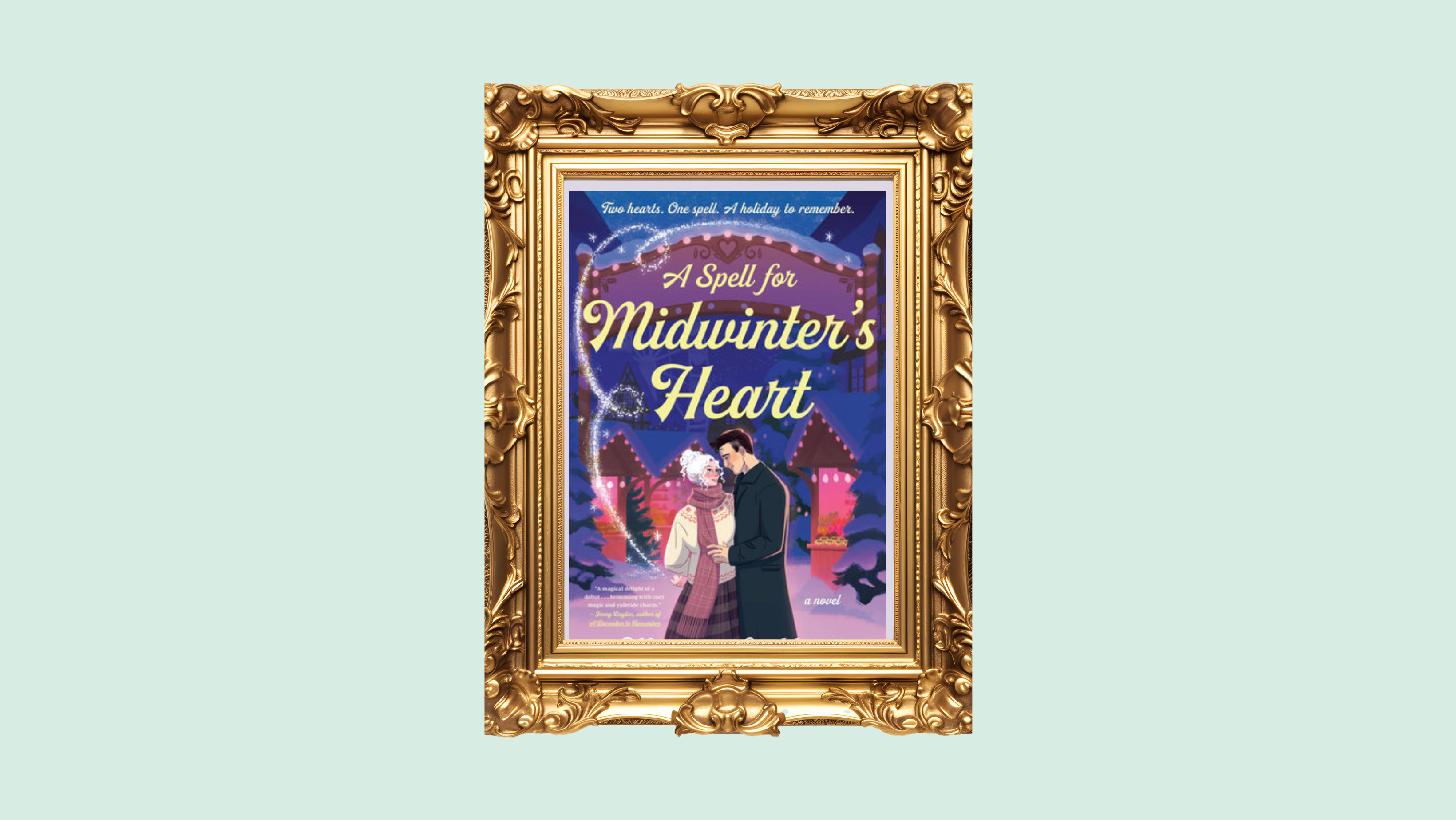
I’m so excited to feature Morgan Lockhart on Books Right Now! I loved her witchy holiday romance, A Spell for Midwinter’s Heart, and I’m honored to have had the opportunity to interview her.
Intro
RD: For anyone who hasn’t read A Spell for Midwinter’s Heart yet, how would you describe your book in one sentence?
ML: A Spell for Midwinter’s Heart is a paranormal holiday romance blend about a witch who returns home for the holidays for the first time in many years after being estranged from her coven and her powers, and she is forced to get over that as it becomes necessary for her to take part in a spell to bring back the snow that will hopefully save their town’s magical holiday festival. Of course, it’s never as simple as one spell, and her path brings her colliding with her old high school rival as they work together on further plans to help save their local hometown magical festival.
A Deep Dive into A Spell for Midwinter’s Heart
RD: What inspired you to write A Spell for Midwinter’s Heart?
ML: A few different things came together to inspire Spell. Over the last five years or so, starting in the pandemic, I became a big cozy reader after years of reading a lot of high-conflict fantasy and dark fantasy. I really wanted to write something cozy, but instead of a second-world cozy fantasy, I was drawn to writing something contemporary. I was also reading a lot of witch fiction and craving more of it.
I’m a big fan of Practical Magic, Sarah Addison, and the kind of storytelling that blends magic into everyday life in a very organic way. I also wanted lower physical danger stakes, even if the emotional stakes stayed high. After years of writing for video games, I was honestly a little tired of violence being the default solution.
Then, I found myself really missing the young adult experience of going home for the holidays. As a mom and an eldest daughter, I’m often responsible for all that happens at the holidays. I wanted to write something that re-creates that wonderful feeling of being wrapped up in the holidays and not being responsible for everything for one week. That informed the fact that the protagonist Rowan is a little bit younger.
The thematic influences emerged from the pandemic. I felt cut off from my community, and it seemed like everyone around me did, too. I also can’t ever stop thinking about climate change.
So the story became about reconnecting and confronting the internal and external reasons someone might feel disconnected. From this, a magic system emerged that is stronger when more people contribute. A scenario emerged that is all about how a community comes together, and the protagonist realizes that it’s less about her and more about how she becomes a part of a bigger group.
When I write things, it tends to be this big stew pot in my brain. I use Mural and, in the past, used notecards to plan the story. I gather all these different clusters of influences, and rather than writing a really detailed outline, I have a really strong idea of what my ingredients are in terms of characters, themes, worldbuilding, and settings. Then, I just start writing.
RD: How did you incorporate the essence of Washington into your book?
ML: I have lived most of my life here so it’s hard to write stories set elsewhere unless I’m writing in a completely alternate world or the far future. I moved up here when I was four and lived in Deming, Washington near Mount Baker. I spent my childhood in the same house out there in the woods. I lived in California for about ten years for college and games, then moved back to Seattle in my late twenties, and I’ve been here since.
I adore the Pacific Northwest. I love our mountains, our landscapes, and our cultural influences from the Native Americans who originally lived on this land to the Scandinavian influence in our early settler communities. I’ve also been all over the state. My mom grew up in Eastern Washington, so I spent quite a bit of time there as a kid. Washington is really in my blood.
If you’re writing something witchy and environmental, the natural landscapes here really lend to that. The Pacific Northwest is a special, beautiful place, and I love pouring that into my books and characters.
RD: What’s one theme or message that you’d like to ensure readers take away from your book?
ML: When writing Rowan’s character, I was thinking a lot about young people, especially young activists, who push themselves really hard and burn themselves out. I do see people who have been in the activism communities for a long time pushing people to rest, lean on to others, and make sure that’s a part of the journey. That was something that was really important to me while writing Rowan’s character, and it’s something I wanted to teach her and teach myself.
Oftentimes big movements are really built of small moments. Rowan goes into the book feeling like only big successes matter, and along the way she starts to appreciate more of the small steps. Unifying around a cause and everybody taking these small steps together is what makes them meaningful.
I see the winter holidays as a time for resilience, rest, and hopefulness. It’s about sitting alongside cold, darkness, and sorrow too, and still finding hope, comfort, and joy. Otherwise you burn out and lose your momentum. The holidays force us to stop, celebrate, get together with family, and meditate on the cycles. We have to live in those cycles as well and not push ourselves to be focused and operating at the same level.
Meet the Storyteller
RD: What were your favorite books growing up?
ML: I grew up on the 70s through 90s YA feminist fantasy. I read quite a few other things, but that’s really the thing I credit with shaping me into the reader and the writer that I am today. I read books by Patricia C. Wrede (Dealing with Dragons), Robin McKinley (The Hero and the Crown), and Tamora Pierce (Alanna), among so many others. Growing up at that time, there was something super appealing about putting strong girls and women at the center of things and taking that hero story and twisting it in ways that make it more true to the young heroine’s story. That forms a lot of the landscape of who I am.
RD: Who are your favorite authors?
ML: It goes back and forth. Lately, I’d say Naomi Novik. I really love the breadth of her work. I’m not a big audiobook listener but I had to listen to Temeraire on audiobook because the way that the narrator reads that book is incredible. I’m the biggest fan of her folk and fairy tales. I tend to prefer takes on the fae where they’re still sexy like they are in Spinning Silver but also very scary and weird.
Heather Fawcett is another current favorite. I love how she portrays the fae and how her stories weave folklore and fantasy. I read an ARC of her newest book, Agnes Aubert’s Mystical Cat Shelter, and that one was great too.
T. Kingfisher is also a recent favorite. I love everything from her, from horror to comedy to dark fairy tales to romantasy. China Miéville and his weird stories have always been a big favorite of mine too. If I were stranded on an island, I’d probably bring One Hundred Years of Solitude by Gabriel García Márquez. I feel like I could read that book a million times and always take something new from it.
RD: What are your favorite video games?
ML: This one is hard. The usual default answer I give is Mass Effect 2. I really love the character writing, the gameplay, and the romances. If I could only play one game forever, it would probably be that one.
On the non-narrative side, I’m a big Civilization fan. It’s the only game I play on the hardest settings. Most of the time I want games to feel less stressful and want to focus on experiencing the story, but with Civ I go all in.
I’m a huge cozy gamer, and I play at least a demo of nearly every major cozy game. Lately I’ve been playing Winter Burrow, which is extremely cute and adds some survival mechanics to an otherwise very cozy game. I also loved Pentiment for its creativity, the murder mystery, the rich storytelling, and the narrative design with the illuminated-manuscript aesthetic.
Also, I would be remiss not to mention What Remains of Edith Finch. That game gave me one of the strongest emotional reactions I’ve ever had to a video game. Whenever I talk about storytelling through mechanics, I have to praise how many unique mechanics they made to express the different emotional beats experienced throughout the story.
RD: Before you wrote romance novels, you were an incredibly successful video game writer, having worked on titles like Halo 4, Halo 5, and Rift. I’d love to learn more about the process of writing for games.
ML: Writing for games is definitely different, and people often underestimate the difference, especially when it comes to the level of interactivity and how much of the storytelling in games exists inside the player’s experience and is not something you can ever deliberately author. That’s part of the magic of storytelling. You can do your best to predict it, but there’s only so much you can predict. Newer writers often try to write over the player’s experience, and in certain games that can work, but it can also end up feeling like an interactive movie that misses the secret sauce of games which is that a lot of the emotional payoff comes from the interactivity and the way the player gets to self-identify within the game world.
A compelling game narrative often comes from worldbuilding and from giving players the tools to create their experience. A really successful video game narrative comes from making sure that every choice is deliberate and helps contribute to the story. In some cases this might mean writing branching choices, but in other cases it’s allowing for a game with an emergent narrative, where you build a sandbox of narrative pieces that combine in really interesting ways to create an emergent story through one specific player experience.
Beyond all that, game writing often involves working with a massive team. A lot of people are going to be making decisions that impact the work you do. That requires a lot of flexibility.
RD: You have such a gift for crafting short stories rooted in mythology. What is one piece of advice you would give to someone looking to start writing these kinds of stories?
ML: I had a short story come out with Luna Station Quarterly, a spec-fic literary magazine for women-identifying writers, earlier this month. It’s called All Creatures, and it takes on kelpie mythology.
I’ve previously written some other short stories that are rooted in different folklore from all over the world. I love folklore because it gets to the heart of what storytelling is about. Stories map our brain to react to what happens in the world around us and to interpret the world around us. People strove to explain the things they couldn’t explain through folklore.
When it comes to retelling folklore, get to the heart of where the story came from and why people told it. There’s often an essential piece of the human experience that folklore is trying to express. Then ask how that same folklore would apply to today’s world.
For example, with the kelpie story, there’s a lot there about man’s relationship with nature. When I recast the story now, I’m thinking a lot about how the kelpie story wouldn’t emerge from a sudden storm or lost crops. I’m thinking about climate change, pollution, and nature fighting back. At the end of the day though, it’s still a story about man and nature.
RD: Do you have a favorite medium of storytelling?
ML: I actually don’t really have a favorite. I have a least favorite, which is poetry. I can’t write poetry to save my life. I can write mediocre poetry, and sometimes I even use that on purpose in games, like if you find a book in a house and it contains a perfectly believable mediocre poem.
But otherwise, each medium fulfills me in a different way. I love the collaborative nature of video games, and I miss that. Something can become so much more than you could create alone when it’s infused with many voices and experiences.
At the same time, I also really like having total or mostly total control in novels and getting to speak in my own voice, rather than writing what someone paid me to write. Publishing still has constraints, but it’s more that I say all the things I want to say, and see which ones someone is willing to publish.
My favorite is probably between books and video games.
RD: What is the most important thing you’ve learned during your writing career so far?
ML: If you want to be a professional writer, you have to consider your audience. That’s especially true in video games, particularly when you step into a long-running series or a major IP. I’ve seen people go wrong when they didn’t respect the IP enough and tried to change it in ways that undermined what the audience loved about it.
It applies to genre too. Romance has specific expectations. You can do so much within that, but there are a few very important things you need to do. I don’t want to pull readers into a ride they didn’t sign up for.
Ultimately, storytelling is a partnership between the artist and the audience. People will take things differently than you intended, and that’s part of it. Sometimes that’s wonderful. Sometimes it can hurt. You learn what you can, and if there’s nothing to learn, you accept it and move on.
RD: What are your favorite Seattle bookstores?
ML: Third Place Books is my local bookstore. Wise Owl Books in the Green Lake area is my hyper-local bookstore. They’re in Tangletown, and they’re adorable.
From the newer romance bookstores, Beguiled Books has especially embraced me so I have to call them out. Lovestruck in Seattle is adorable too. I’ve also been all the way up to Hardcovers in Mill Creek and loved them.
I also have to give a shoutout to Charlie’s Queer Books. It’s pink and delightful, and when I’m in the mood for a good LGBTQ book, that’s where I’m going to go. Charlie is usually there and is delightful.
RD: Do you enjoy writing in public? If so, what are your favorite coffee shops or spots to write in?
ML: I write in public more out of necessity than preference, especially as a mom. I’ve written in so many places, including on my phone in Google Docs, which feels like an abomination, but sometimes you’re sitting poolside during swim lessons and inspiration hits.
I always tell myself I’m going to make a habit of writing in coffee shops, but I usually only do it when I’m doing write-alongs with author friends. Most of the time I write at home or steal opportunities when I can, like on a ferry or a pool deck.
I did apply for the Seattle Public Library Writers-in-Residence program. I don’t know if I’ll get it, but it would be amazing to write at the Central Library.
RD: Who are your favorite fictional witches?
ML: I love the Owens sisters in Practical Magic. I also really loved The Very Secret Society of Irregular Witches and its follow-up A Guide to Magical Innkeeping. I loved all the witches in those stories, including the supporting characters.
I also loved Agatha All Along. Even though she’s an antagonist, I love Agatha and the whole cast of witches.
I also have to mention the witches from Terry Pratchett as well as the witch best friend character from Patricia C. Wrede’s Enchanted Forest Chronicles.
What’s Next
RD: What’s next for you? I’d love to learn more about your recent short story release, the sophomore novel announcement, and any other projects you may be working on.
ML: My newest short story is out now in Luna Station Quarterly, and the cover is gorgeous. I’m still waiting on the physical copy, but it’s available online. The stories in the issue feel very wintery, and I’m excited to dig into the rest.
I also have two more short stories out on contract. One is coming in January or February with Metastellar. It’s one of my weirder pieces, kind of hard to categorize, with some magic, some time-y elements, and a bit of literary energy. Another is a horror story coming from Penumbric, though they buy far in advance so I don’t have a date yet.
I’m working on the follow-up to A Spell for Midwinter’s Heart. I’m allowed to confirm that much. It will follow the romance series tradition of shifting focus to a different set of characters we met in book one and explore more of that world and those characters. I can’t share more details yet, but feel free to start guessing!
Thank you for reading! This interview has been edited for length and clarity. The full version of this interview is available on Spotify.
More About Morgan Lockhart

Morgan Lockhart hails from the Pacific Northwest, where she lives with her partner, children, and pack of fur babies. A longtime writer of video games and short stories, her debut novel, A Spell for Midwinter’s Heart, released in fall 2025 from Dutton.

Leave a Reply